
Through the Experimental Acres program, we are learning together with the goal of advancing best-management practices that produce both food and the services of a climate-resilient ecosystem.
Farmers know their land best
The Experimental Acres program supports a farmer-led discovery of new practices to build soil health and enhance carbon recapture.
The program offers a de-risked learning season for testing best management practices to assist in developing a business case for practices worth repeating. Experimental Acres supports farmer-created projects through 3 funding streams:
Living Roots and Green Cover
Projects which extend the time soil is covered and/or has living roots in it.
Innovation
Projects which implement new ways of doing things on the farm.
Integrating Animals on the Farm
Projects which incorporate livestock into farm systems.
2025 Farm Hosts
Suppressing Plant Competition Using Ducks
Shiying Lu - Brilliant Meadows Farm
Ducks will be pastured around saplings to test whether they can improve tree growth by tramping & suppressing weeds at the base of the trees.
Visual monitoring will be conducted to note whether the ducks are effective in reducing vegetation without damaging the trees. Effectiveness of the system will be explored including tracking of labour involved – is housing/moving the birds less labour intensive than mowing and does income from eggs offset additional labour? Shiying will identify how much area can be managed by the number of ducks present. Tree performance will be assessed by monitoring growth between bud scars to evaluate growth rates.
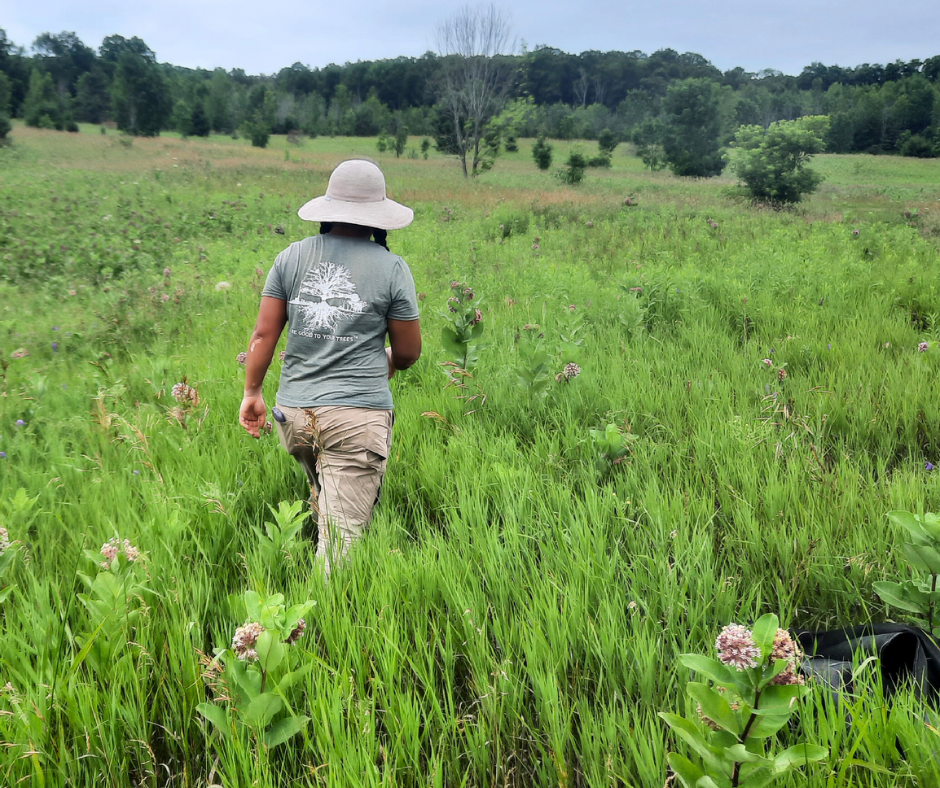
40+ saplings were planted in this control area, with plant growth making them now difficult to find
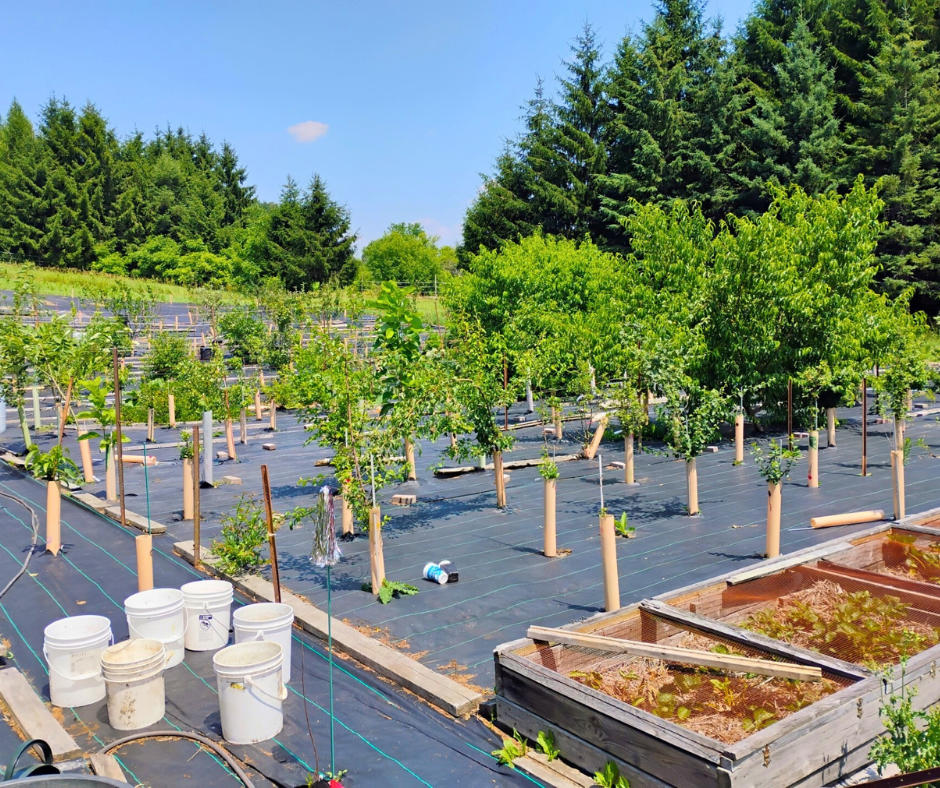
The orchard, including a wide variety of fruit and nut trees and shrubs to be converted to espalier
Using Espalier Method for a Diverse Orchard System
Henry Van Oudenaren - Hockley Hank Farm and Garden
Henry will install posts and wire in the orchard to explore the effect of espalier style growth on a wide variety of fruit and nut trees and shrubs.
Hockley Hank Farm & Garden grows well over 200 different varieties of food producing plants from around the world. His project will explore the ability of these plants to produce in an espalier system, increasing food production capacity from a small unit of land and decreasing labour as well. Monitoring will include visual monitoring of plant health, tracking weight of produce from each plant year over year and soil testing.
Creating a Natural Pesticide from Rhubard
Brian and Jeanette French and Family - Lennox Farms
Lennox Farms will create a fermented rhubarb leaf extract product to explore its use as a shelf stable natural pesticide for vegetable crops.
They will spray replicates of broccoli with various rates of the pesticide weekly and monitor the impact on pest pressure. Monthly tissue testing will be taken from the broccoli, to monitor the food safeness of the product. They plan to conduct DNA analysis on the product itself to analyze the fermentation process also.
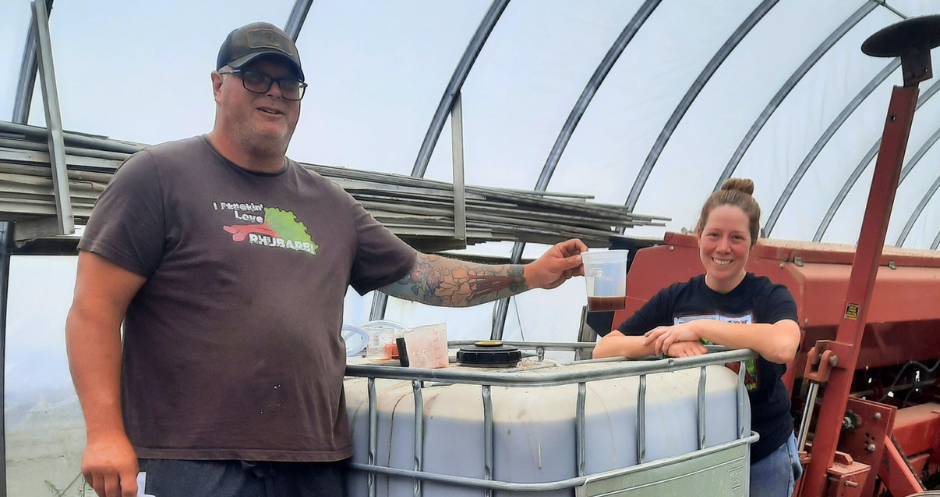
Brian and Jeanette French stand with their first tote of product.
About Experimental Acres
The Experimental Acres program was developed as a part of Guelph-Wellington Our Food Future, a project funded by Infrastructure Canada. The County of Wellington facilitated the program in Wellington and Dufferin Counties in 2022, and Grey County joined in 2023. The 2025 program is administered by Grey Agricultural Services.