
Family Life, Electrified
When the family vehicle was faced with an unexpected $3,000 repair bill, Lisa decided it was time to make the switch.
"It's Like Sport Mode for Ranchers"
From errands, parts runs, and town trips, an EV has transformed Natalie and Carl's daily rhythm at Peace Valley Ranch in Mulmur.
Winter Commutes Made Easy
Winter driving is no problem for Fred. With all-wheel drive, snow tires, and pre-conditioning, his EV handles Dufferin winters with ease.
How Going Electric Paid Off
Cara has been driving electric since 2011. What started as a commitment to the environment quickly turned into something more, saving her over $3,000 a year.
Joe's Story
“It’s like driving a go-kart with superpowers.”
Joe grew up around muscle cars. His dad worked for Chrysler and GM dealerships. “I never thought I’d go electric,” he admits. “But this truck? It’s addictive.”
The instant torque of Joe’s Ford F-150 Lightning has him grinning at every stoplight. “It’s got that teenager thrill. You tap the pedal, and it just goes. It’s like driving a go-kart with superpowers.”
Now, this self-declared car guy says he wouldn’t go back. “Once you’ve driven one, you get it.”
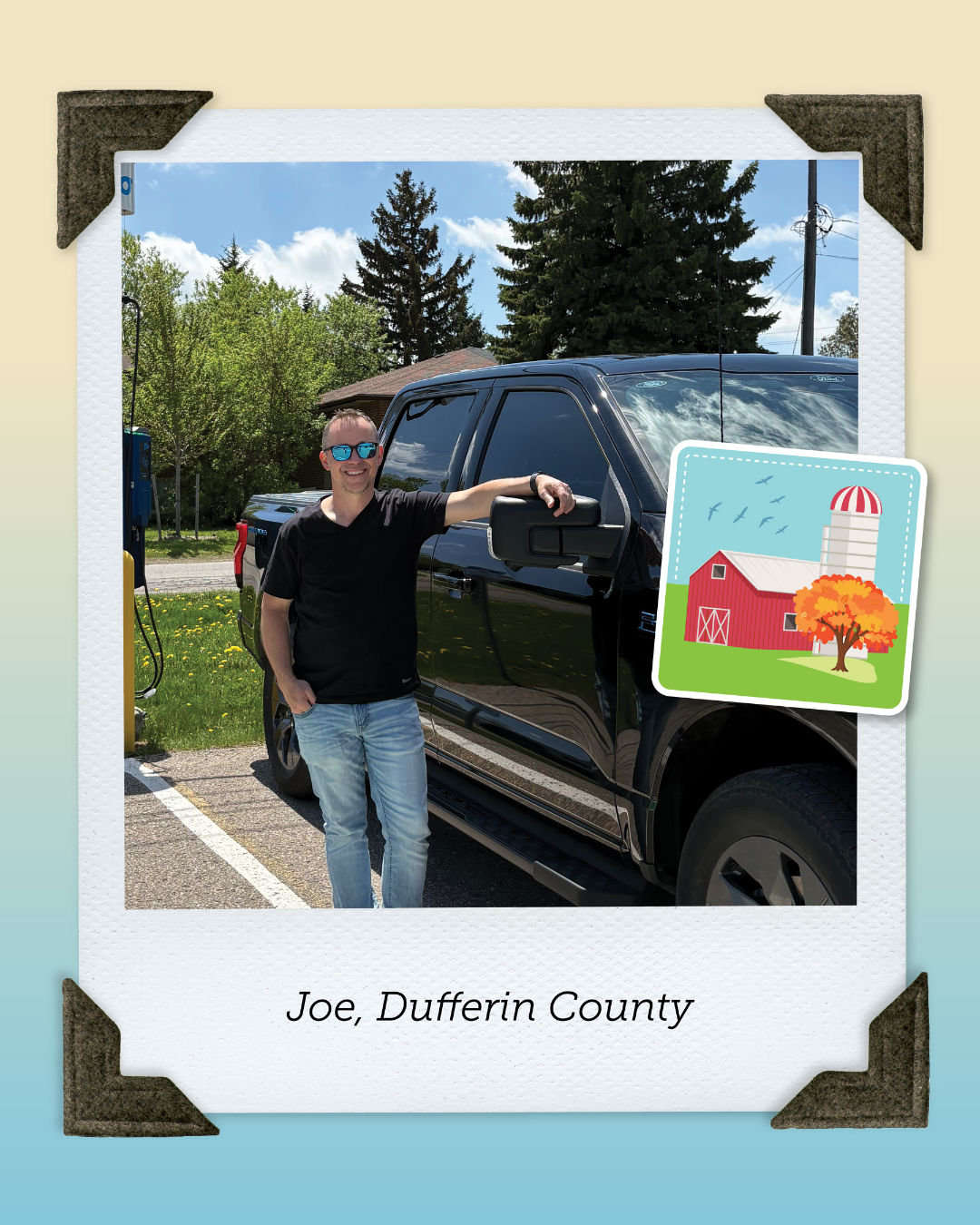
Since switching to electric, Joe’s family has clocked over 8,000 km and spent just $300 on charging.
“I charge overnight in Dufferin when rates drop, so it costs about 50 cents to fully charge my car"
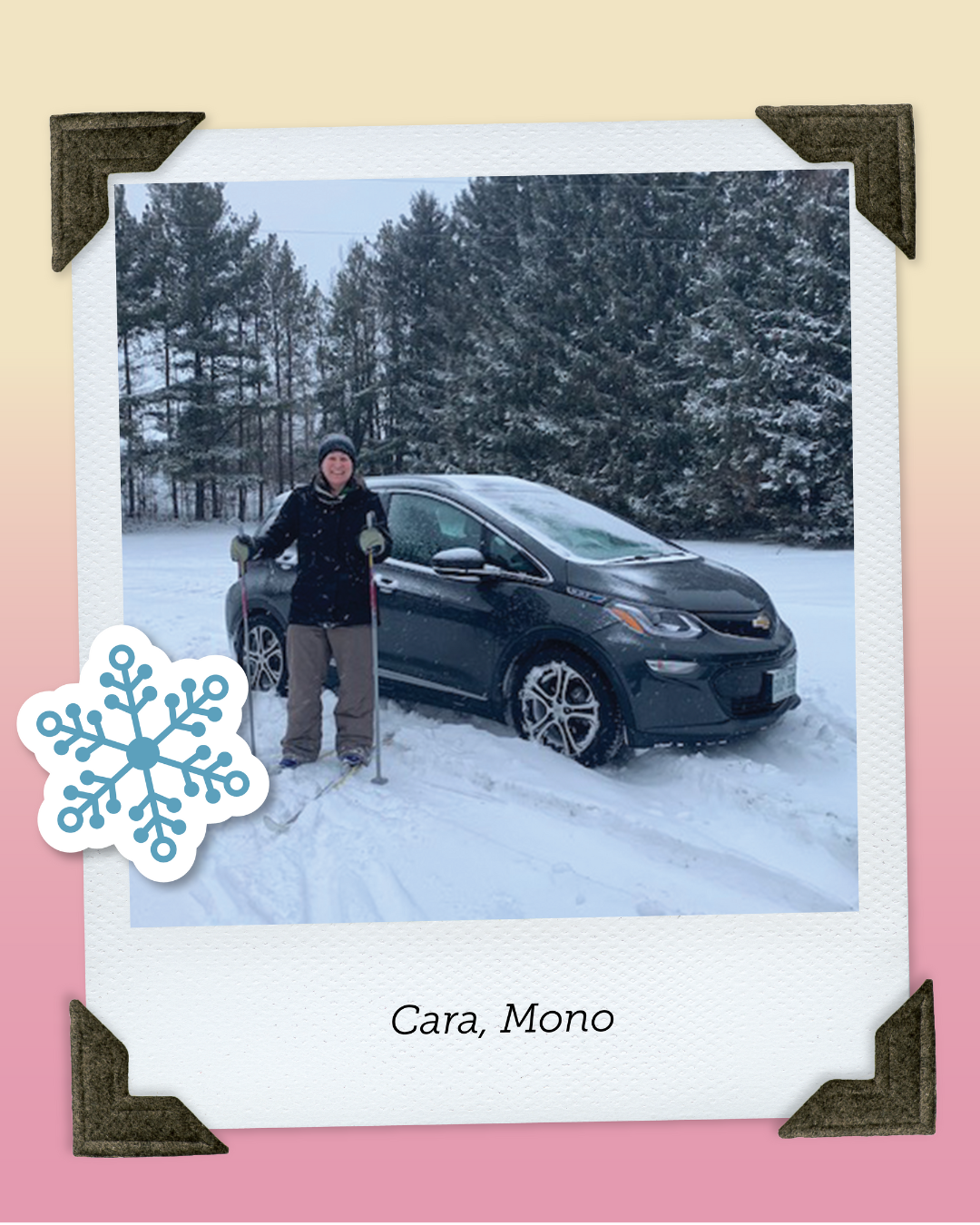
Cara's Story
“People worry about the batteries but they’re lasting beautifully.”
After 14 years of driving electric, Cara has heard all the concerns, especially about battery life. “People ask if the battery is going to break and end up in a landfill. But the truth is, these batteries are valuable. No one’s tossing them away.”
In fact, Cara hasn’t paid for a single battery-related repair. “I’ve had to change tires and brakes, just like any other car. That’s it.”
And today’s EV batteries? “They’re expected to outlast the car. There’s real data behind that now.”
Her message to skeptics: “I think people just want a reason not to do it. But once you drive one, it’s hard to go back.”
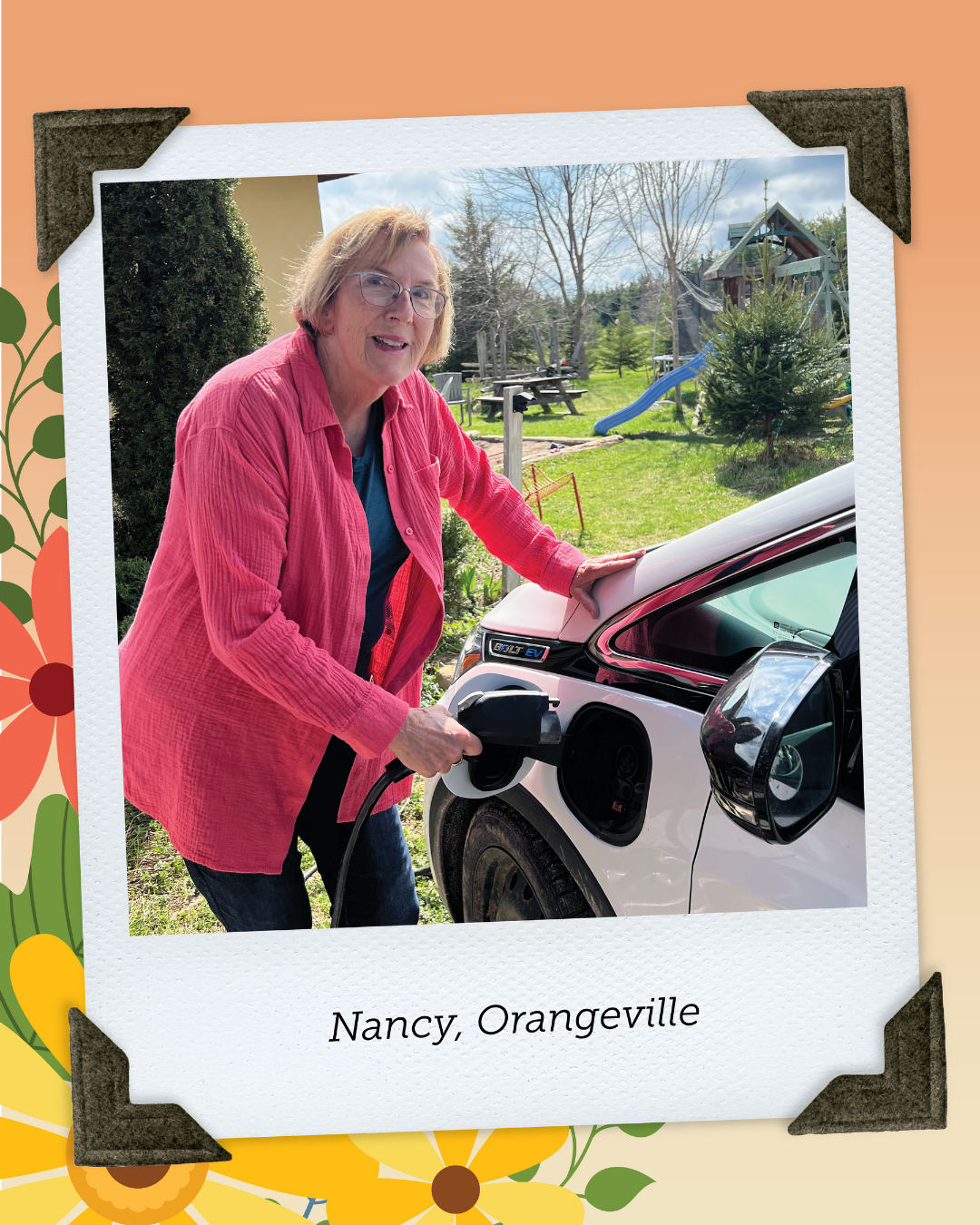
Nancy's Story
“It cost me about $2 to get to my daughter’s in Toronto and back. You can’t beat that!”
Nancy doesn’t just drive an EV, she lives her values. “I call myself an environmentalist, I really care about what happens to this world and what we are passing on to the next generation.”
From her eco village home near Orangeville, she blends environmental consciousness with everyday practicality. Her Chevy Bolt takes her from farm life to family time, including weekly visits to her grandkids in Fergus and Toronto, all on about $2 worth of electricity.
Her message to people considering the switch to an EV: “Just do it, you won’t regret it!”
“It’s really quite joyful to drive it… I would never go back.”
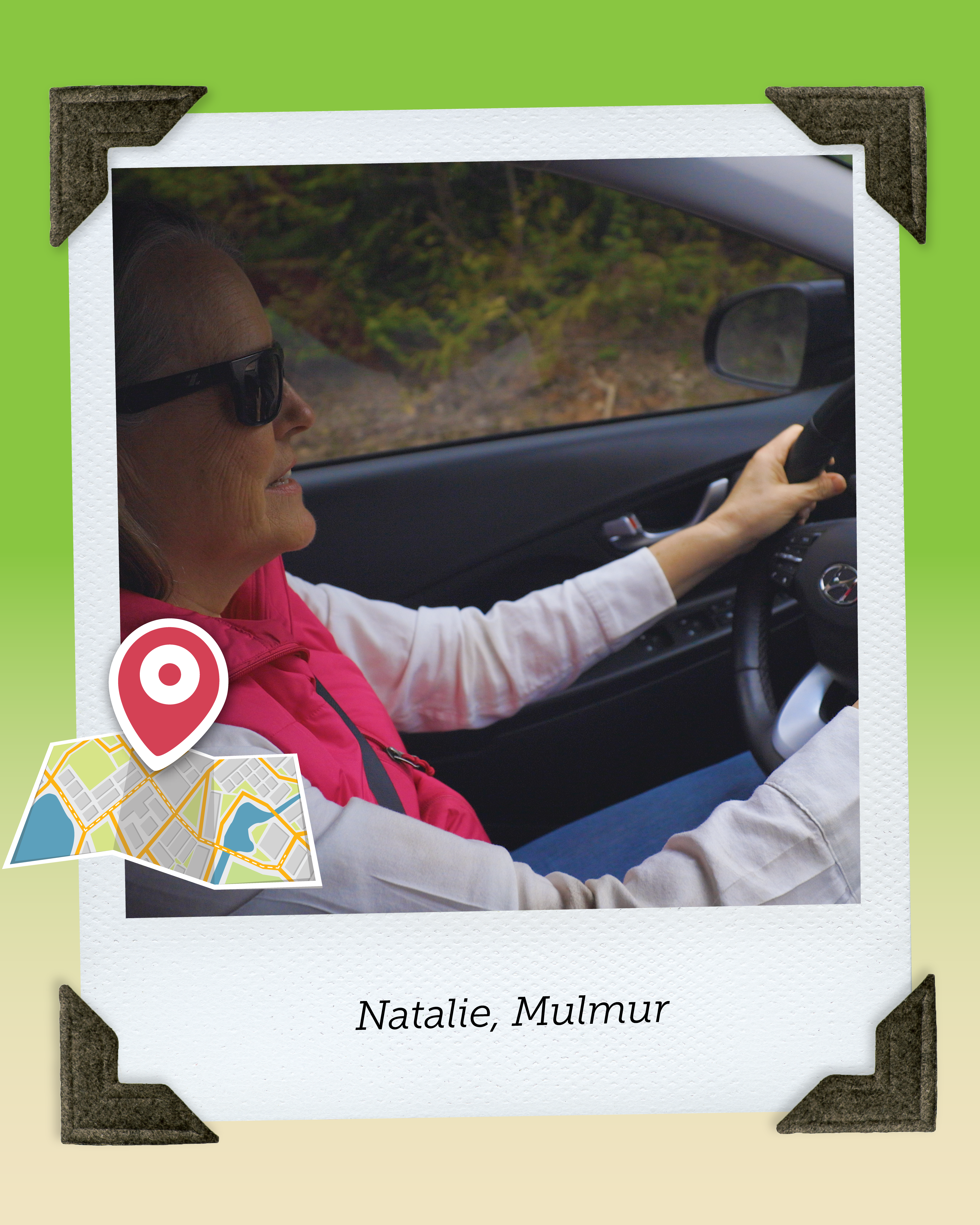
Natalie compares driving an EV to driving standard: engaging, responsive, and even a little geeky.
Natalie's Story
It’s fun to drive, and it held its charge through a six-day ice storm.”
Living on Peace Valley Ranch, Natalie’s EV has transformed her daily rhythm. She drives about 40km per day, running errands and visiting town, but no longer worries about wasting gas, “Now it’s almost a game: who gets to drive into Shelburne for Tim Hortons?”
For Natalie, EV ownership comes with unexpected joy, like regenerative braking. “We call it playing with the paddles. You drive down Caledon Mountain and watch your range go up. Who wouldn’t want to put energy back in their car on a downhill?”
Natalie’s message to Dufferin County residents considering the switch? “Come and talk to me. It’s the best decision we ever made.”
Carl's Story
“It’s a step into the future and it fits with how we live.”
That’s the verdict from Carl who runs the Peace Valley Ranch in Mulmur with his wife Natalie. Carl has been ranching for 50 years and sees the EV as a part of a bigger picture.
He sees the move to an EV as a step in the right direction. “We’ve focused on sustainability for 25 to 30 years. The EV is one more way we can sink more carbon and support technologies that move us forward.”
The decision to switch wasn’t one Carl and Natalie took lightly. “Range anxiety is real” they say, “but once you’re over it, it’s great!” Carl adds, “Our range is 400km which is farther than you think. You just plan your routes and it’s no big deal. I’ve drive to Peterborough and back in a day, charged in between – just to try that out – and it was easy.”
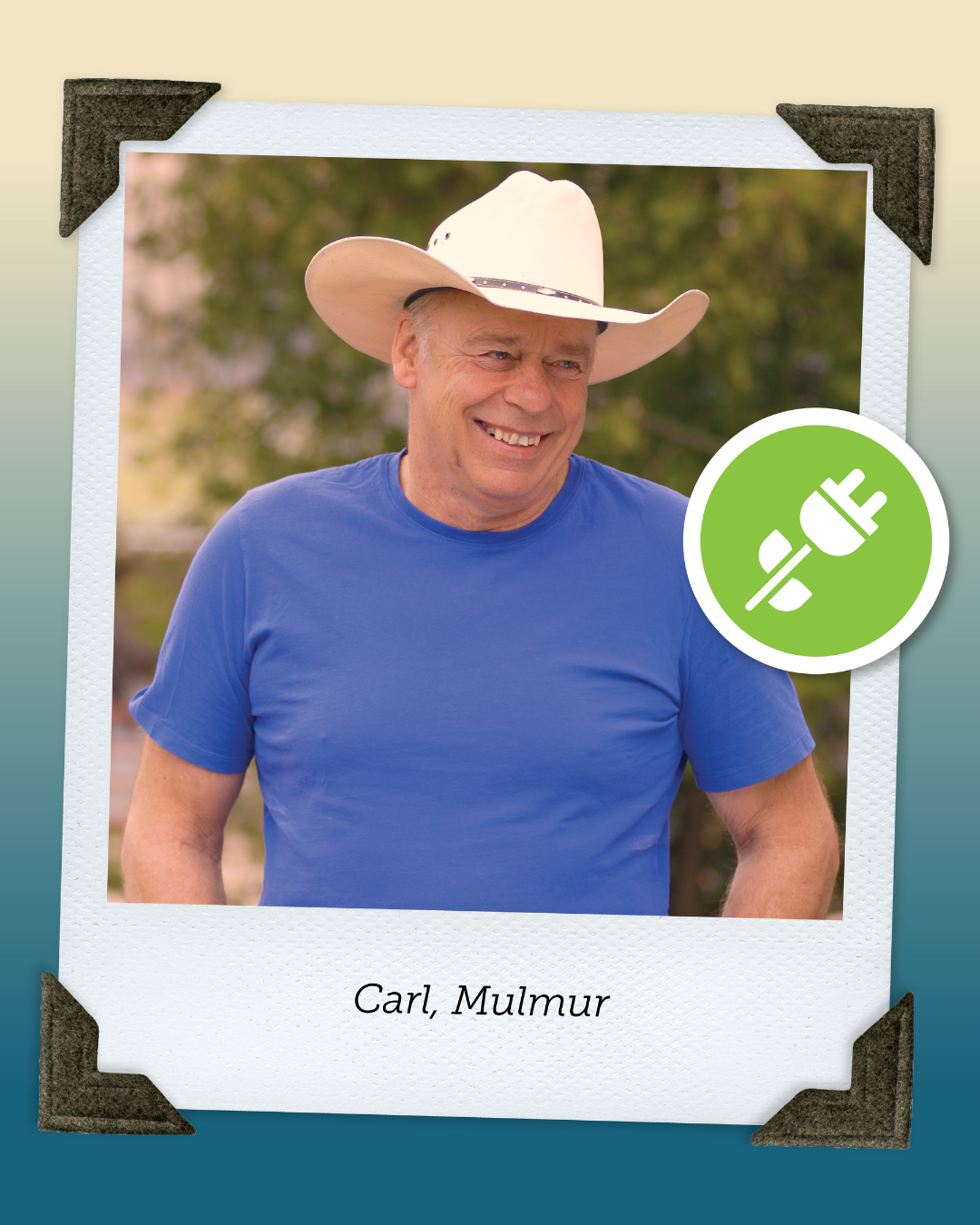
“Everything humans do has an environmental cost. This is a step forward.”
Explore the Charge Up in Dufferin Network
Charge up at 22 Level 2 FLO and 2 Level 3 FLO fast chargers across Dufferin.
17,703 charging sessions
25,189 hours of connection time
316,649 kwh of energy used
64,700 kg co2 saved
*Updated December 31, 2025 | Calculations based on Scope 1 Emissions
Curious but cautious?
Figuring out if an electric vehicle is right for you can feel overwhelming. With questions about range, charging, and long-term costs, it’s easy to get lost in conflicting information.
Find the EV that matches your lifestyle!
Explore Plug’n Drive’s Buyer Guide to compare the cost of your selection to a similar gas vehicle. An EV can save you money because it can be cheaper to own and maintain than a 100% gasoline-powered car.
From Mine to Motor
With almost half of local greenhouse emissions attributed to the transportation sector, Dufferin County recognizes that the road to net-zero must prioritize active, public, and electrified transportation options, including the transition to electric vehicles.
However, the expansion of critical minerals extraction, essential to meet the growing needs of the electric vehicle production, must uphold Indigenous rights. For generations, colonial approaches to the natural resource economy have systematically violated the economic, ecological, social, and treaty rights of Indigenous Peoples who have been dispossessed from their lands and excluded from decision-making processes.
The County of Dufferin affirms that to build a climate-just future that critical mineral projects require robust environmental protections and the recognition of Indigenous inherent rights to sovereignty, nationhood, and self-determination. This requires respecting the principles of free, prior, and informed consent in accordance with the United Nations Declaration on the Rights of Indigenous Peoples and Bill C-15, An Act Respecting the United Nations Declaration on the Rights of Indigenous Peoples.
Around the world, we also assert that human rights laws must be upheld within all mineral value chains and ensure that local communities and mineral-producing countries share equitably in the benefits.

Partially funded by Natural Resources Canada's Zero Emission Vehicle Awareness Initiative