Dufferin County calls on residents to share roads and keep community safe
Dufferin County is committed to fostering safe and inclusive transportation networks for all road users so that everyone gets to where they need to go in the community, safely.
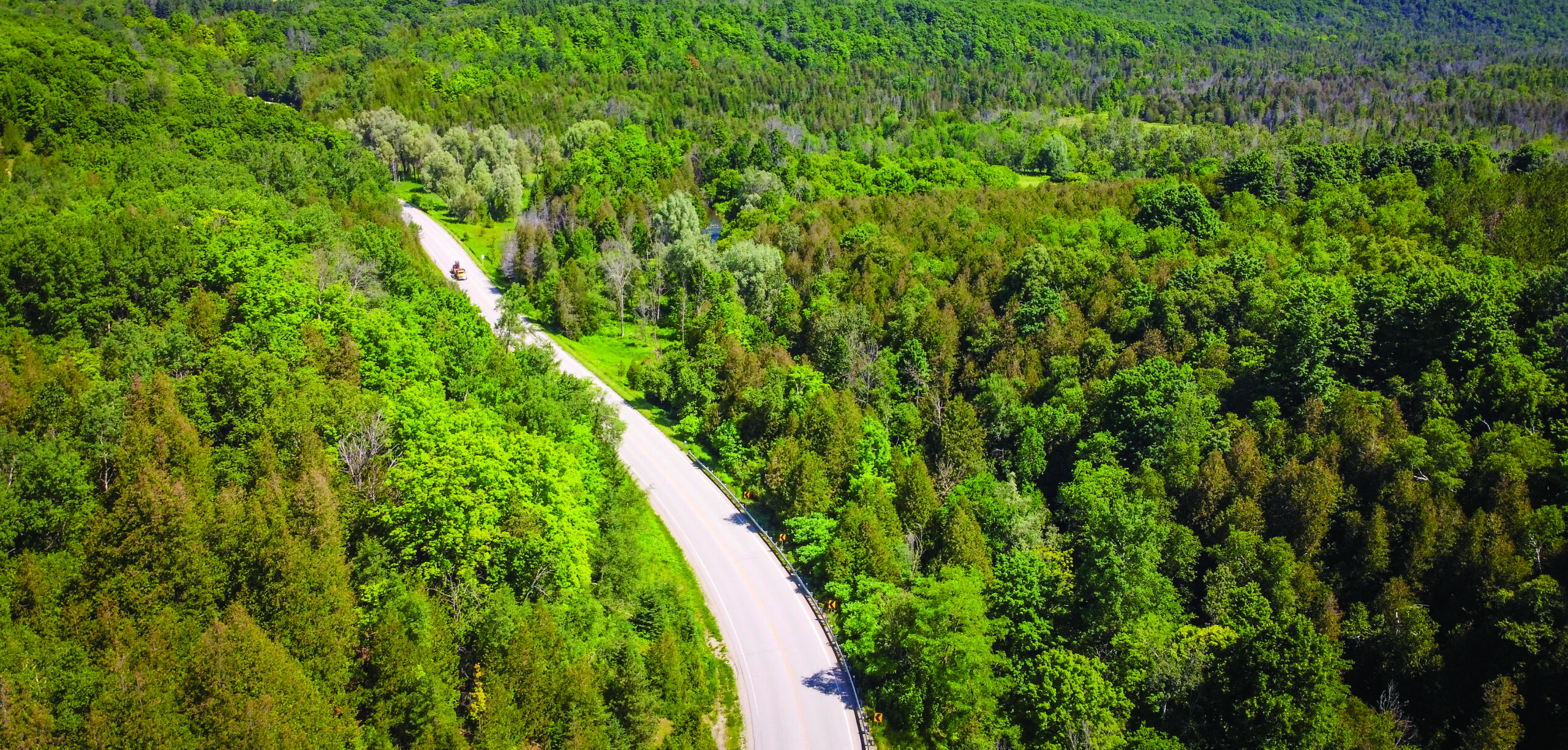
Dufferin has many rural roads and road networks that are navigated by users of all kinds, like drivers, cyclists and pedestrians, as well as horse-drawn carriages.
“Home to a diverse population of citizens, Dufferin County has a longstanding history of Mennonites located throughout our community, especially in the rural municipalities of Melancthon, Mulmur and Grand Valley,” says Bruce Hillborn, Manager, Operations and Fleet, Dufferin County. “A certain community of Mennonites use the horse and buggy as a means of transportation. We must all work together to share our roads and keep our community safe while traveling.”
There are many things to consider when prioritizing safety on County roads, like soft gravel shoulders, hidden intersections and driveways, sudden turns and curves, low lighting and the presence of wildlife. These considerations apply to all road users.
But there are also specific laws and safety considerations that drivers must prioritize based on their chosen mode of transportation.
“We all have a role to play in ensuring road users get where they need to go safely throughout Dufferin County, no matter one’s chosen mode of transportation,” says Bruce.
Safety for vehicular road users
Everyone must ensure that they prioritize safety for the entire Dufferin community, including those in horse-drawn carriages.
If operating a vehicle, when approaching a horse-drawn carriage, drivers must ensure that they:
- Slow down and maintain a safe distance. Providing a safe distance ensures that should anything fall off the buggy, you can react in a timely and safe way. Horse and buggies can also roll back a few feet after coming to a complete stop. Maintaining a safe distance helps reduce accidents.
- Approach and pass with caution. Only pass when it’s safe and there is plenty of space to do so without startling a horse or its driver.
- Reduce any unnecessary speeding, engine revving and loud noises. Horses are sensitive to loud noises and quick movements. Do not spook or startle horses.
- Pull over and stop if you see a horse under distress or out of control. Stay in a safe location until safe to move.
Safety for horse-drawn carriage users
Horse-drawn carriage users are asked to keep the following laws and safety considerations top of mind to help keep our roads safe:
- Have an orange and red slow-moving sign on your carriage. The Province of Ontario requires that a horse-drawn carriage be equipped with an orange and red slow-moving sign.
- There are exemptions that exist. If you are exempt from using this sign, you must have the back of the carriage outlined with reflective tape that is visible from at least 150 metres.
- Use reflective equipment like horse blankets, headlights and tail lamps or tape. Always make your horse and buggy vehicle as noticeable as possible, especially during conditions where there is limited visibility.
- Always obey all traffic rules and laws. Review the Highway Traffic Act to understand all rules and regulations of the road, especially as they relate to slow-moving vehicles.
- If a horse–drawn carriage cannot fit entirely on the shoulder of a road, the operator must move the vehicle entirely into the road lane.
By sharing our roads and prioritizing safety, we can all enjoy our travels in Dufferin County and ensure our friends, family, loved ones and community members, including the local Mennonite communities using horse-drawn carriages, get where they need to go safely.
Questions?
Contact Dufferin County Roads and Infrastructure at 519-941-2816 extension 2600 or publicworks@dufferincounty.ca.
-30-
MEDIA CONTACT:
Megan Ball, Manager of Communications
mball@dufferincounty.ca